



Glass Fuse vs Ceramic Fuse: What’s the Difference?
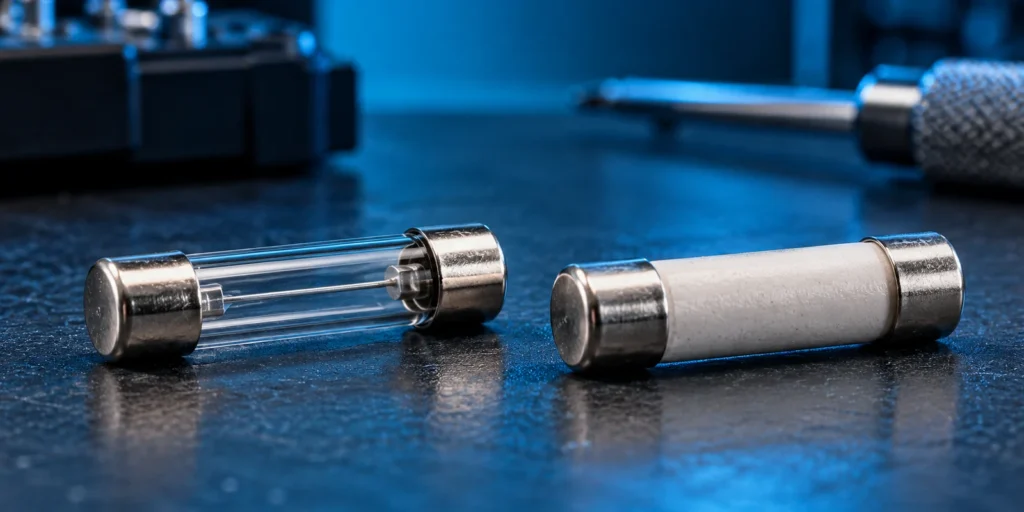
Glass Fuse vs Ceramic Fuse: What’s the Difference?
Glass and ceramic describe body material, not a complete fuse rating. Both can be sold in similar cartridge sizes; the same physical fit does not make them interchangeable.
Many high-breaking-capacity products use ceramic construction, but ceramic does not automatically mean high breaking capacity, and glass does not automatically mean “low-energy only.” Published Eaton product examples show substantial differences even within one glass or ceramic family. Nor is every mains application restricted to ceramic; the exact fuse and equipment design decide.
Replacement checklist
Read the old part number or equipment specification. Match current rating, AC/DC voltage, time-current characteristic, interrupt rating, length and diameter. Verify the holder. A visibly intact glass element does not conclusively prove the fuse works; remove it from a de-energized circuit and test continuity if needed. Do not replace a ceramic cartridge with a same-size glass unit just because the ampere number matches.