



What Fuse for 12V?
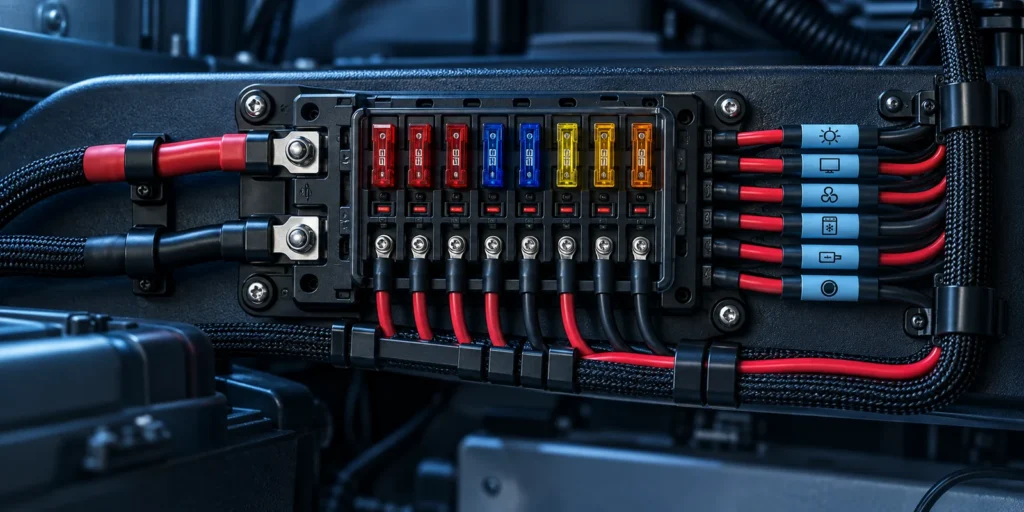
What Fuse for 12V?
“12 V” specifies circuit voltage, not fuse amperage. A small LED circuit and a large inverter can share a 12 V battery yet need very different cable and protection.
Choose the fuse in order
- Read the device manual for its specified fuse type and rating. For an added circuit, determine the maximum continuous input current and any startup surge.
- Select cable for current, routing, insulation temperature, grouping and acceptable voltage drop. Check the smallest section, including pigtails.
- Select an appropriate fuse whose rating and time-current response allow normal operation while protecting the cable. Check its DC voltage and interrupt ratings against the source, then use a compatible holder.
- Put protection near the source of an added positive feed, before the unprotected cable run; protect any smaller branch at its takeoff.
For a simple resistive load, I ≈ P/V estimates current. A motor or electronic converter requires its input specification and startup behavior. There is no universally safe “load × 1.25” fuse choice and no single ampere boundary that dictates blade, MIDI, ANL or another form factor.
For an existing vehicle circuit, use the original specified rating. A repeatedly blown fuse is a fault to diagnose, not a reason to increase its rating.