
Breaking Capacity (AIC) Explained: How to Match Fuse Interrupting Rating to Available Fault Current
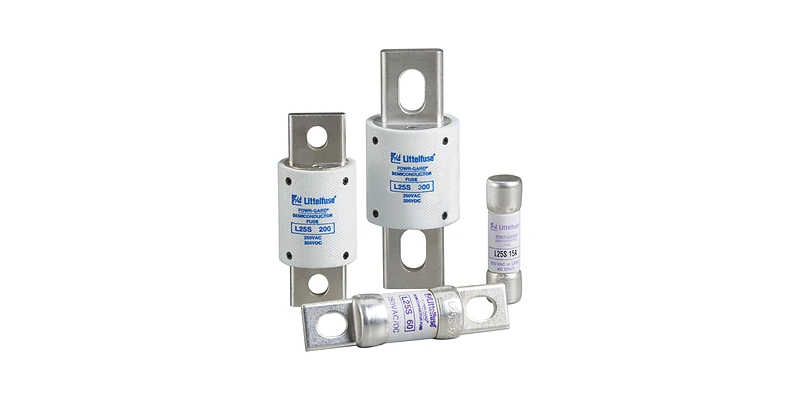
Breaking Capacity (AIC) Explained: How to Match Fuse Interrupting Rating to Available Fault Current
A fuse’s interrupting rating — also called breaking capacity or AIC (Amps Interrupting Capacity) — is the maximum fault current the fuse can safely interrupt without rupturing, exploding, or causing a fire or arc-flash hazard. Selecting a fuse without matching its interrupting rating to the available fault current at the installation point is one of the most dangerous oversights in electrical design.
This article explains what interrupting rating really means, how to determine available fault current, and what happens when a fuse with insufficient AIC is installed.
What Is Breaking Capacity?
When a short circuit occurs, current rises to extremely high values — often 10,000 A to 200,000 A depending on the upstream transformer size and source impedance. The fuse must:
- Detect the fault current
- Open the circuit (melt the element)
- Extinguish the resulting arc before the case ruptures
- Prevent the ionized gases and plasma from igniting surrounding materials
The breaking capacity is the maximum prospective current at which the fuse can complete this sequence safely. Above this value, the fuse may rupture violently, eject hot gases, or sustain an arc that re-ignites after the element melts.
For Bussmann LPJ and TCF fuses, the breaking capacity is 300 kA RMS symmetrical at 600 V AC. For many other UL classes (RK1, RK5, CC), the rating is typically 200 kA.
Why AIC Ratings Differ From Continuous Current Ratings
It is critical to understand that the AIC rating is independent of the fuse’s continuous current rating. A 30 A LPJ fuse has the same 300 kA AIC as a 600 A LPJ fuse. The continuous current rating tells you how much load the fuse carries day-to-day; the AIC rating tells you how much fault current the fuse can interrupt once.
A common mistake is to assume that a higher-amperage fuse has higher AIC — it does not. The AIC is a property of the fuse’s internal construction (element design, arc-quenching filler, body strength).
How to Determine Available Fault Current
The available fault current at the fuse location depends on three factors:
1. Transformer kVA and impedance The utility transformer feeding the facility determines the maximum possible fault current. Use the formula:
“ Available fault current (A) = Transformer kVA × 1000 / (√3 × Voltage × %Impedance) “
For a 1500 kVA transformer at 480 V with 5.75% impedance: “ 1500000 / (1.732 × 480 × 0.0575) = 31,350 A “
2. Conductor impedance The wire run from the transformer to the fuse adds impedance and reduces the available fault current. Long wire runs, smaller conductors, and higher impedance paths all reduce the fault current at the fuse location.
3. Connected motor contributions Motors that are running at the moment of the fault can briefly contribute current as their magnetic fields collapse. Model this contribution using an accepted short-circuit method or engineering software; simply adding motor full-load current is not a reliable substitute.
Why a Short-Circuit Study Is Worth It
A proper short-circuit study calculates the available fault current at every protective device in the system, accounting for transformer impedance, conductor lengths, conductor sizes, and motor contributions. For industrial facilities, NEC 110.9 requires that the overcurrent protective device have an interrupting rating sufficient for the available fault current at its line terminals.
The cost of a short-circuit study is trivial compared to the cost of an arc-flash incident.
What Happens When AIC Is Exceeded
When a fuse with insufficient AIC attempts to interrupt a fault current above its rating, one of several catastrophic failures occurs:
- Case rupture: The body explodes, ejecting hot gases, melted metal, and ceramic filler
- Sustained arcing: The arc does not extinguish, allowing fault current to continue flowing
- Ignition of surrounding materials: The hot gases can ignite cable insulation, panelboard enclosures, or building materials
- Phase-to-phase or phase-to-ground arc: The fault escalates beyond the original short circuit
These failures are precisely the scenarios UL 248-8 testing is designed to prevent. The “Let-Thru” curves published by manufacturers represent verified test data — the fuse will limit the fault current to the curve value if the upstream available fault current is within the AIC.
Matching AIC to Your Application
Use this table as a starting point for AIC selection:
For new construction, specifying fuses with 200 kA or 300 kA AIC costs little more than lower-rated fuses and provides substantial safety margin.
Common Misconceptions
“The breaker will protect the fuse” No. The fuse is typically upstream of breakers in the system. A breaker that opens during a fault cannot limit the peak current through an upstream fuse that is already failing.
“All 600 V fuses have the same AIC” False. Glass-tube 5×20 mm fuses often have 35 A or 100 A AIC — completely unsuitable for industrial use. Always verify.
“Higher amperage fuse = higher AIC” False, as explained above. The AIC is a property of the fuse construction, not the amperage.
“DC AIC is the same as AC AIC” False. DC fault currents do not pass through zero naturally, making them harder to interrupt. A fuse rated 300 kA at 600 V AC may only be rated 100 kA at 300 V DC, or have no DC rating at all.
Selecting the Right Fuse for High-AIC Applications
For industrial and large commercial services, always specify Class J (LPJ), Class RK1 (LPS-RK), Class CF (TCF), Class L, or Class T fuses. These classes have 200 kA or 300 kA AIC ratings.
For service entrance protection, consider Class L fuses (up to 6000 A, 200 kA AIC) for the main disconnect.
Avoid Class H fuses (also called “renewable” or “one-time”) in any modern installation. Class H fuses have only 10 kA AIC — a fraction of typical available fault current.
Frequently Asked Questions
What is the AIC of a Bussmann LPJ fuse? 300 kA RMS symmetrical at 600 V AC.
Is higher AIC always better? Not necessarily. Higher AIC fuses cost more, but the safety margin is significant. For industrial applications, the cost difference is minimal.
Does the AIC rating depend on voltage? Yes. A fuse rated 300 kA at 600 V AC may be rated lower at 480 V or 240 V. Always verify the AIC at your specific system voltage.
Can a fuse with lower AIC be used downstream of a current-limiting fuse? Yes. The upstream current-limiting fuse reduces the let-through fault current to a value well within the downstream device’s AIC. This is called “series rating” or “cascading.”
Where to Verify Available Fault Current
If you do not have an existing short-circuit study, the utility company can provide the maximum available fault current at the service entrance. From there, work with a licensed electrical engineer to calculate the fault current at downstream protective device locations.
FuseStock stocks Bussmann LPJ (300 kA), TCF (300 kA), and other high-AIC fuse classes for industrial and commercial applications.